
Desert Safari Dubai with Tanoura Dance – Where Adventure Meets Arabian Tradition
When thoughts of Dubai arise, images of architectural marvels, luxurious shopping avenues, and futuristic attractions are often brought to mind. However, beyond the shimmering skyline and modern highways, a very different landscape is discovered. Vast stretches of golden dunes unfold quietly, preserving stories of resilience, heritage, and culture. It is within this timeless setting that one of the most memorable experiences in the United Arab Emirates is offered: the Desert Safari Dubai with Tanoura Dance.
Although the city has been transformed into a global metropolis, the desert has remained a powerful symbol of Emirati identity. Therefore, when a desert safari is chosen, more than an excursion is undertaken—an immersion into tradition is embraced. Moreover, when the evening is concluded with the mesmerizing Tanoura Dance, a cultural dimension is beautifully added to the adventure.
The Timeless Beauty of the Arabian Desert
To begin with, it should be understood that the Arabian Desert is not merely a stretch of sand. Rather, it is a living landscape shaped by centuries of history. Just outside Dubai, the scenery is dramatically changed. Towering buildings are gradually replaced by rolling dunes that appear almost sculpted by the wind.
For generations, life in this desert was sustained by Bedouin communities. Traditions were developed, hospitality was refined, and survival skills were perfected. Consequently, when a modern desert safari is experienced, echoes of this heritage can still be felt. Although vehicles and luxury camps have been introduced, the spirit of the desert has been carefully preserved.
In addition, a sense of calm is often experienced upon arrival. The noise of the city is left behind, and a quiet vastness takes its place. It is precisely this contrast that makes the desert safari so appealing to visitors.
The Journey into the Dunes
Typically, the experience is begun with hotel pickup in a comfortable 4×4 vehicle. Soon afterward, the urban environment is gradually left behind, and the desert landscape comes into view. Anticipation is built as the paved roads are replaced by soft sand tracks.
Before dune bashing is commenced, tire pressure is usually reduced to ensure a smoother ride over the sand. Safety briefings are provided, and then the adventure is set in motion.
Dune Bashing – An Adrenaline-Filled Introduction
First and foremost, dune bashing is considered the highlight of the safari by many guests. Skilled drivers maneuver powerful vehicles over steep dunes and sharp ridges. As a result, passengers are taken on a ride that feels like a rollercoaster created by nature itself.
At times, steep climbs are attempted, and dramatic descents are experienced. Laughter is heard, excitement is shared, and unforgettable memories are formed. Even though the activity is thrilling, it is conducted under strict safety standards. Thus, both enjoyment and security are ensured.
Subsequently, short pauses are often made to allow photographs to be taken. During these moments, the vastness of the desert can truly be appreciated.
The Enchanting Desert Sunset
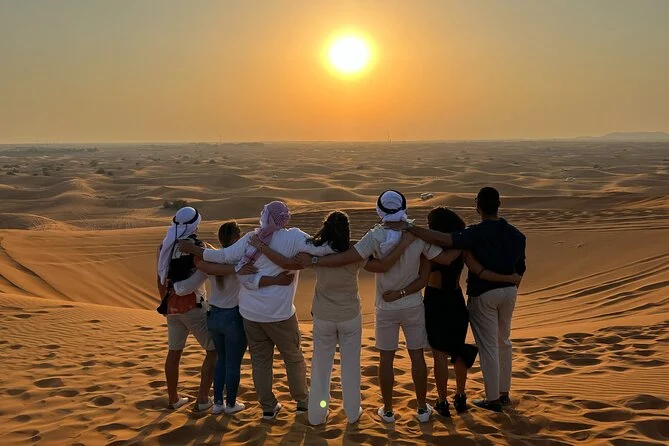
After the intensity of dune bashing has subsided, attention is usually directed toward the horizon. Gradually, the sun begins to descend, and the desert is bathed in golden hues.
It is widely agreed that a desert sunset in Dubai is among the most picturesque sights in the region. Shades of amber, orange, and crimson are reflected across the dunes. Photographs are eagerly captured, yet even the best images struggle to fully convey the serenity that is felt.
Furthermore, a quiet stillness settles over the desert during sunset. The wind softens, conversations become hushed, and a peaceful atmosphere is created. In that moment, the timeless nature of the desert is truly realized.
Arrival at the Traditional Desert Camp
Following the sunset stop, guests are transported to a Bedouin-style camp. These camps are thoughtfully designed so that a traditional ambiance can be recreated. Low seating arrangements, patterned carpets, lanterns, and decorative cushions are carefully arranged to evoke an authentic setting.
Upon arrival, Arabic coffee and fresh dates are typically offered as a gesture of hospitality. This tradition, which has been practiced for centuries, symbolizes warmth and generosity.
Meanwhile, a variety of activities are made available:
- Henna designs are applied by skilled artists.
- Camel rides are offered for short desert strolls.
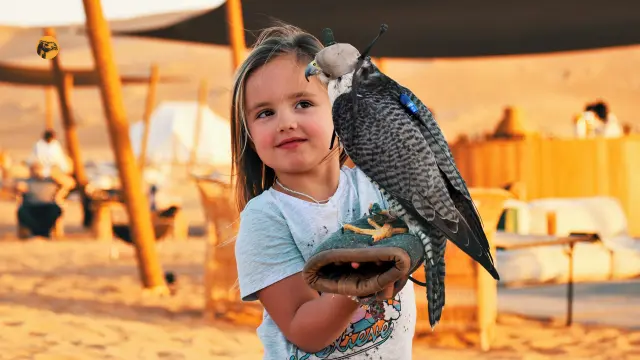
- Falcon photographs can be taken.
- Traditional attire is provided for memorable pictures.
As a result, cultural engagement is gently encouraged without being overwhelming.
A Culinary Experience Under the Stars
As evening progresses, dinner preparations are finalized. A buffet featuring Arabic and international dishes is presented. Grilled meats, fragrant rice, fresh salads, and vegetarian options are carefully arranged. In addition, traditional sweets such as baklava are offered to complete the meal.
Dining in the open desert air adds a distinctive charm. Above, a sky filled with stars can be seen clearly, especially away from the city lights. Consequently, the meal is transformed into more than nourishment—it becomes an experience.
Soft background music is played, conversations are shared, and anticipation begins to build for the evening’s main performance: the Tanoura Dance.
Tanoura Dance – A Cultural Masterpiece
While various forms of entertainment may be included in a desert safari, the Tanoura Dance is often regarded as the most visually captivating. Rooted in spiritual tradition, this performance has been adapted into a cultural spectacle that is both meaningful and mesmerizing.
Historical Origins
The Tanoura Dance is believed to have originated in Egypt and is closely connected to Sufi spiritual practices. It is inspired by the whirling rituals of the Mevlevi order established by Rumi, the renowned Persian poet and mystic.
In Sufi philosophy, whirling is performed as a form of meditation. Through continuous spinning, a spiritual connection between the earth and the divine is symbolized. Over time, this sacred ritual was transformed into a folkloric performance, yet its symbolism has been retained.
Therefore, when the Tanoura Dance is witnessed during a Desert Safari Dubai, a tradition that spans centuries is being observed.
The Performance Unfolds
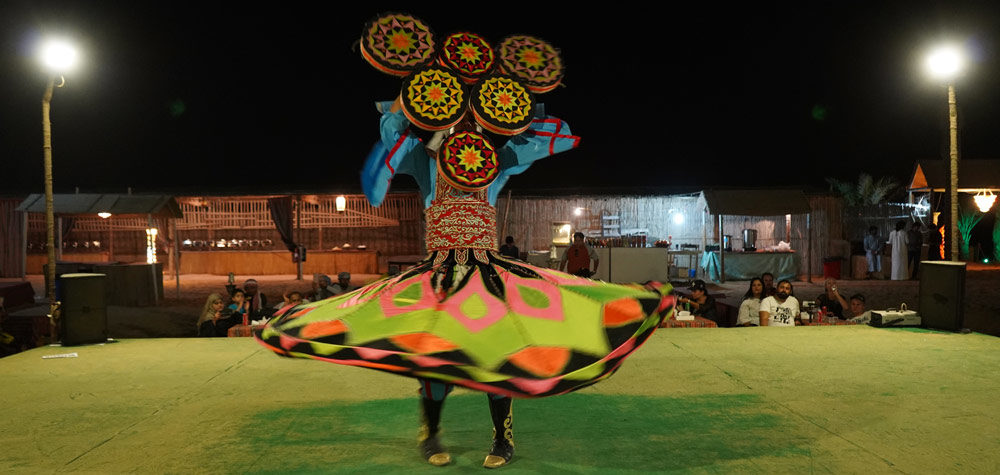
As the lights are dimmed and traditional music is played, the Tanoura performer enters the stage. A vibrant, multi-layered skirt is worn, often illuminated with colorful LED lights. Initially, gentle movements are made. However, soon afterward, continuous spinning is begun.
Remarkably, balance is maintained despite the rapid rotations. Layer upon layer of fabric is lifted, extended, and transformed into symmetrical patterns. The skirt expands outward, forming a circular display of color and motion.
Because the dance can continue for extended periods, physical endurance is required. Nevertheless, grace is preserved throughout the performance. Audience members are frequently left astonished by the dancer’s control and stamina.
Symbolism in Motion
Importantly, the Tanoura Dance is not performed solely for entertainment. Symbolic meaning is embedded within each movement. For example:
- The circular motion represents the rotation of planets.
- The upward-facing palm symbolizes receiving blessings from above.
- The downward-facing hand signifies sharing those blessings with the earth.
Thus, a philosophical narrative is quietly conveyed through movement.
Even though the desert safari setting emphasizes enjoyment, the spiritual undertones of the dance are still subtly present.
Tanoura Dance in Modern Dubai
Interestingly, in a city celebrated for architectural icons such as Burj Khalifa and expansive destinations like Dubai Mall, traditional performances continue to be appreciated.
This contrast between old and new defines much of Dubai’s character. While innovation is constantly pursued, heritage is simultaneously honored. Consequently, the inclusion of Tanoura Dance in desert safaris serves as a reminder that culture remains valued amid rapid modernization.
Why This Experience Is So Memorable
Several elements are seamlessly combined in a Desert Safari Dubai with Tanoura Dance:
- Adventure is provided through dune bashing.
- Natural beauty is showcased during sunset.
- Hospitality is expressed at the desert camp.
- Culinary traditions are shared through dinner.
- Cultural heritage is displayed via Tanoura Dance.
Because these aspects are integrated into one evening, a comprehensive experience is delivered.
Moreover, emotional connections are often formed. Laughter is shared during the ride, awe is felt during sunset, satisfaction is enjoyed during dinner, and wonder is experienced during the dance. As a result, memories are created that linger long after the trip has ended.
Seasonal Considerations
Generally, the most comfortable months for a desert safari are between October and April. During this period, milder temperatures are experienced. Conversely, summer months can be intensely hot; therefore, evening tours are strongly recommended if travel occurs during that time.
Light clothing is usually advised, although a jacket may be needed in winter evenings. In addition, sunglasses and sunscreen are recommended during daytime activities.
A Family-Friendly Cultural Adventure
It is worth noting that the Desert Safari Dubai with Tanoura Dance is considered suitable for families. Children are entertained by camel rides and vibrant performances. Meanwhile, adults appreciate the cultural richness and scenic beauty.
However, dune bashing may not be recommended for pregnant women or individuals with certain medical conditions. In such cases, alternative arrangements can often be made.
An Evening Concluded in Serenity
Eventually, the music softens, the performances conclude, and preparations for departure are made. Guests are transported back to the city, where bright lights and modern comforts await.
Yet, even after returning to the urban environment, something lingers. The rhythmic spinning of the Tanoura dancer, the warmth of the desert breeze, and the glow of the sunset are remembered vividly.
In retrospect, it becomes clear that a Desert Safari Dubai with Tanoura Dance offers more than entertainment. A connection to heritage is established. A balance between thrill and tranquility is achieved. And most importantly, a deeper understanding of Arabian culture is gained.
Final Reflections
Ultimately, while Dubai is frequently celebrated for its innovation and luxury, its soul can still be found in the desert. Through the safari experience, traditions are showcased, hospitality is extended, and cultural artistry is performed beneath the open sky.
Therefore, when a visit to Dubai is planned, time should be reserved for the desert. For it is there that adventure is embraced, history is honored, and the mesmerizing Tanoura Dance is performed in a way that captivates hearts.
Indeed, beneath a blanket of stars and surrounded by golden dunes, an evening is experienced that feels both timeless and extraordinary.