
Tanoura Dance in Dubai Desert Safari: A Whirling Celebration of Culture and Desert Magic
Dubai is often described as a city of contrasts—where ultramodern architecture meets ancient traditions, and luxury coexists with simplicity. While the city dazzles with innovation, its cultural soul is best discovered beyond the skyline, deep in the rolling dunes of the Arabian desert. One of the most unforgettable experiences during a desert safari in Dubai is witnessing the Tanoura dance, a performance that blends art, spirituality, and heritage into a breathtaking spectacle.
Under the vast desert sky, surrounded by glowing lanterns and the quiet whispers of sand, the Tanoura dance unfolds as a timeless ritual. It is not merely a show for tourists, but a symbolic expression of balance, devotion, and cultural identity that has endured for generations.
The Desert Safari: A Gateway to Emirati Culture
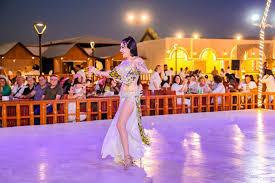
A Dubai desert safari is more than an adventure—it is a carefully curated cultural journey. The experience usually begins with thrilling dune bashing, followed by moments of calm such as camel riding, falcon photography, and watching the sun melt into the horizon. As evening arrives, guests are welcomed into a traditional Bedouin-style camp where hospitality takes center stage.
Low seating, patterned carpets, Arabic coffee, and the aroma of grilled delicacies create an atmosphere rooted in tradition. As dinner is served and conversations flow, the night comes alive with cultural performances. Among these, the Tanoura dance emerges as a soulful centerpiece, offering a moment of reflection amid celebration.
What Is the Tanoura Dance?
The Tanoura dance is a traditional form of whirling dance that originated in the Middle East, particularly associated with spiritual practices. The word “Tanoura” refers to the wide, circular skirt worn by the dancer, which becomes the focal point of the performance.
Unlike modern dance forms designed purely for entertainment, Tanoura is deeply symbolic. The continuous spinning motion reflects universal harmony, the cycles of life, and the idea of spiritual elevation. Over time, the dance evolved from a sacred ritual into a cultural art form, now performed across the Arab world and showcased prominently in Dubai’s desert safaris.
A Performance Born from Discipline and Devotion
What makes the Tanoura dance truly remarkable is the discipline behind it. The dancer spins continuously for extended periods without showing signs of dizziness or imbalance. This requires years of practice, physical conditioning, and mental focus.
The dancer’s posture remains controlled and composed throughout the performance. While the body moves rapidly, the expression on the dancer’s face is often calm and meditative. This contrast highlights the inner strength and spiritual grounding required to perform the dance effectively.
In the stillness of the desert, this focused movement becomes even more powerful, capturing the attention of everyone watching.
The Costume: A Living Canvas of Color
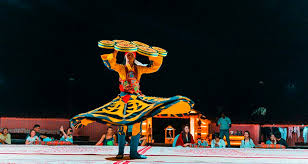
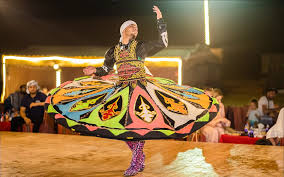
The Tanoura costume is one of the most visually striking aspects of the performance. The skirt is wide and layered, designed to expand fully when the dancer spins. Bright colors dominate the design, often arranged in patterns that create stunning visual effects as they rotate.
Each movement transforms the skirt into a new shape, making the costume appear alive. Some performances include skilled manipulation of the skirt, where the dancer lifts, folds, or rotates different layers to form symbolic designs.
Against the neutral tones of the desert sand and night sky, the vibrant colors create a dramatic contrast that makes the performance unforgettable.
Music That Guides the Motion
The Tanoura dance is accompanied by traditional Arabic music that sets the rhythm and emotional tone. Instruments such as drums, flutes, and stringed instruments work together to create a soundscape that feels both ancient and alive.
The performance often begins slowly, allowing the dancer to find balance and rhythm. As the tempo increases, the spinning intensifies, building energy and excitement. Despite the increasing speed, the dancer remains perfectly synchronized with the music.
The sound of drums echoing through the desert amplifies the experience, making the audience feel connected not just to the dancer, but to the environment itself.
Symbolism Woven into Every Spin
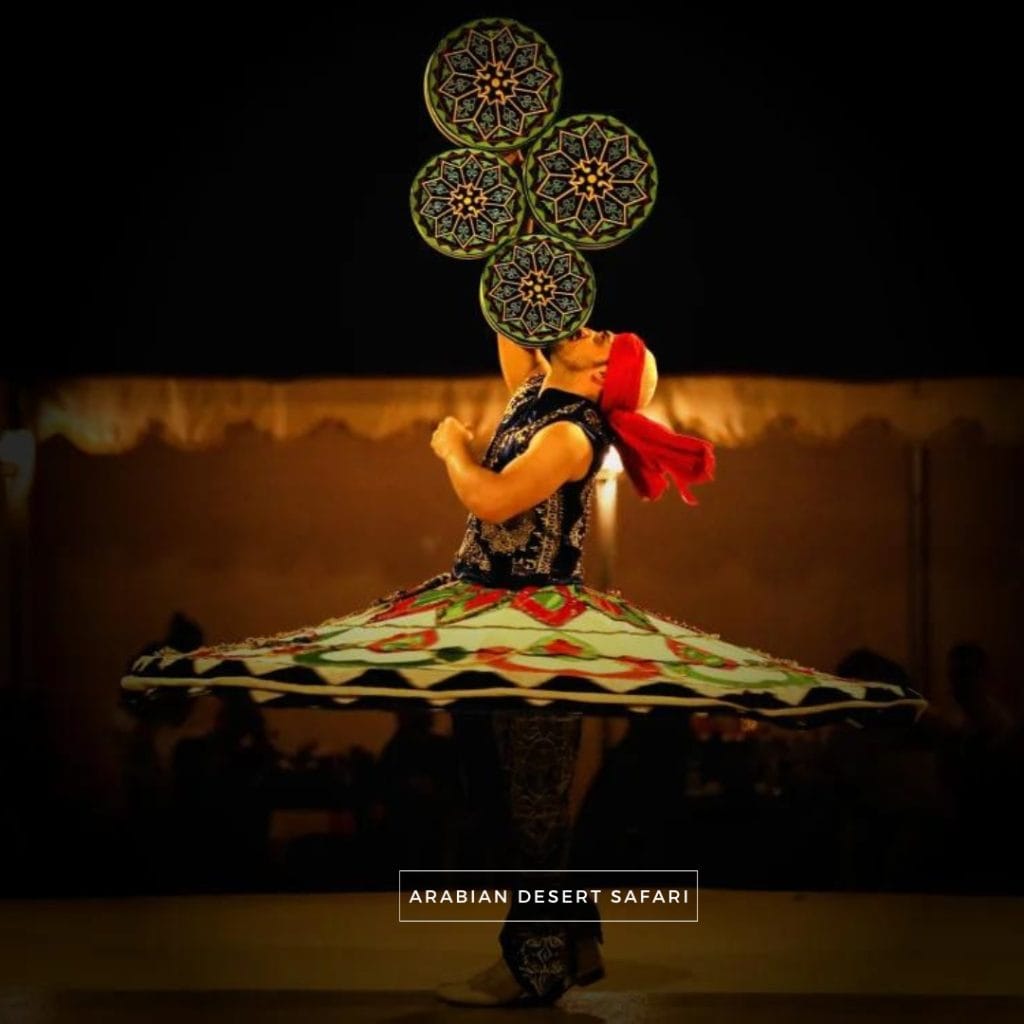
Every element of the Tanoura dance carries symbolic meaning. The circular motion represents infinity and the continuous flow of existence. The dancer’s connection to the ground symbolizes humanity’s bond with the earth, while the upward movement reflects spiritual aspiration.
Often, the dancer’s hands are positioned deliberately—one raised toward the sky and the other lowered toward the ground. This gesture symbolizes the flow of energy and blessings from the heavens to the world below.
Even for those unfamiliar with these meanings, the performance naturally evokes a sense of harmony, balance, and introspection.
Tanoura Dance as a Cultural Experience for Tourists
Dubai attracts visitors from every corner of the globe, many of whom are eager to experience authentic local culture. The Tanoura dance serves as an accessible and engaging introduction to Middle Eastern traditions.
Unlike static displays or historical exhibits, this live performance communicates culture through movement and emotion. It allows visitors to experience tradition rather than simply observe it. The universal language of music and motion makes the performance easy to appreciate, regardless of cultural background.
For many travelers, watching the Tanoura dance becomes a defining memory of their desert safari.
The Atmosphere of a Desert Night Performance
Watching the Tanoura dance in a theater would be impressive, but witnessing it in the desert is something entirely different. The open space, cool night air, and quiet vastness of the dunes create an atmosphere that enhances the performance.
Soft lighting casts shadows across the sand, and the stars overhead add a natural sense of wonder. The absence of city noise allows the music and movement to take center stage. This setting transforms the performance into an immersive experience that feels intimate and profound.
How Tanoura Dance Complements Other Safari Entertainment
Desert safari entertainment usually includes a variety of performances, such as belly dancing, fire shows, and traditional music. Each element adds energy and excitement to the evening.
The Tanoura dance provides balance. Its steady rhythm and spiritual undertone offer a moment of calm reflection amid more dynamic performances. This contrast enriches the overall experience, making the evening feel well-rounded and thoughtfully curated.
Rather than competing with other performances, the Tanoura dance enhances them by adding depth and meaning.
A Photographer’s Delight
The Tanoura dance is also a favorite subject for photography. The swirling motion of the skirt creates beautiful patterns that can be captured in both still images and video. Many photographers experiment with slow shutter speeds to highlight the movement and colors.
However, no photograph can fully replicate the feeling of being present—watching the dancer spin effortlessly while the desert stretches endlessly beyond the stage.
Preserving Tradition in a Modern City
Dubai’s rapid modernization makes its commitment to cultural preservation even more significant. By including traditional performances like the Tanoura dance in desert safaris, the city ensures that ancient art forms remain relevant and appreciated.
These performances provide employment for skilled artists and help pass traditions down to future generations. At the same time, they educate visitors, fostering respect and understanding for local heritage.
The Tanoura dance stands as a reminder that progress does not require abandoning tradition—it can celebrate it.
Why the Tanoura Dance Leaves a Lasting Impression
Many activities in Dubai offer excitement, luxury, or novelty, but the Tanoura dance offers something deeper. It creates an emotional connection that stays with visitors long after they leave the desert.
The simplicity of a spinning dancer, combined with music, color, and meaning, has a powerful impact. It invites viewers to slow down, reflect, and appreciate beauty in movement and tradition.
This lasting impression is what makes the Tanoura dance a highlight of the desert safari experience.
Final Thoughts: A Whirl of Heritage in the Heart of the Desert
The Tanoura dance is not just an evening performance—it is a story told through motion, color, and rhythm. In the heart of Dubai’s desert, it connects the modern traveler to ancient traditions that have shaped the region for centuries.
For anyone seeking more than adventure during a desert safari, the Tanoura dance offers a meaningful cultural encounter. It is a reminder that beneath Dubai’s modern exterior lies a rich heritage waiting to be experienced.
As the dancer completes the final spin and the music fades into the desert night, one thing becomes clear: some moments don’t just entertain—they resonate.